Category: Lehrman Institute

  • Gold Counterweights

    Gold Counterweights

    by Ralph J. Benko

    March 04, 2014

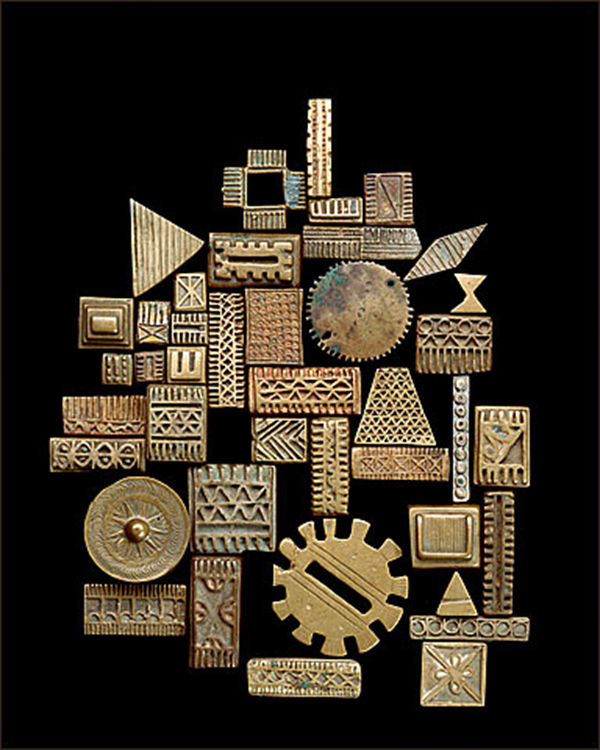
    Image courtesy of Africard.ch.

    The scale counterweights for measuring gold from the Ashanti of Africa are beautiful artifacts. This writer possesses a number of them.

    Wikipedia describes these weights this way:

    Akan Goldweights were used as a measuring system by the Akan people of West Africa, particularly for weighing gold dust which was currency until replaced by paper money and coins. They are referred to locally as mrammou and the weights are made of brass and not gold. Used to weigh gold and merchandise, at first glance the goldweights look like miniature models of everyday objects. Based on the Islamic weight system, each weight had a known measurement. This provided merchants with secure and fair-trade arrangements with one another. The status of a man increased significantly if he owned a complete set of weights. Complete small sets of weights were gifts to newly wedded men. This insured that he would be able to enter the merchant trade respectably and successfully. Beyond their practical application, the weights are miniature representations of West African culture items such as adinkra symbols, plants, animals and people.

    Scholars use the weights, and the oral traditions behind the weights, to understand aspects of Akan culture that otherwise may have been lost. The weights represent stories, riddles, and code of conducts that helped guide Akan peoples in the ways they live their lives. Central to Akan culture is the concern for equality and justice; it is rich in oral histories on this subject. Many weights symbolize significant and well-known stories. The weights were part of the Akan’s cultural reinforcement, expressing personal behaviour codes, beliefs, and values in a medium that was assembled by many people.

    Anthony Appiah describes how his mother, who collected goldweights, was visited by Muslim Hausatraders from the north. The goldweights they brought were "sold by people who had no use for them anymore, now that paper and coin had replaced gold-dust as currency. And as she collected them, she heard more and more of the folklore that went with them; the proverbs that every figurative gold-weight elicited; the folk-tales, Ananseasem, that the proverbs evoked." Appiah also heard these Ananseasem, Anansi stories, from his father, and writes: "Between his stories and the cultural messages that came with the gold-weights, we gathered the sort of sense of a cultural tradition that comes from growing up in it. For us it was not Asante tradition but the webwork of our lives."

    There are a number of parallels between Akan goldweights and the seals used in Harappa. Both artifacts stabilized and secured regional and local trade between peoples, while they took on further meaning beyond their practical uses.

    Given the power of culture over politics, even in a modernistic utilitarian age such as ours the propensity for gold and its artifacts to take on "further meaning beyond their practical uses" can be said to represent a modest additional factor in favor of the gold standard. "Central to Akan culture is the concern for equality and justice." So, too, should these be central to ours.

  • Tom Paine’s Dissertation on Paper Money

    Tom Paine's Dissertation on Paper Money

    by Ralph J. Benko

    October 08, 2013
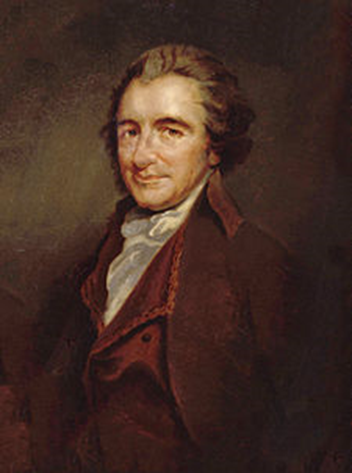
    Courtesy of the National Portrait Gallery.

    Tom Paine, author of Common Sense, the Crisis, and other tracts powerfully formative of America's political character aroused (and arouses) strong feelings.

    Napoleon reportedly said that "A statue of gold should be erected to him in every city in the universe." John Adams, however, in an 1805 letter to Benjamin Waterhouse, referred to him as "begotten by a wild boar on a bitch wolf, never before in any age of the world was suffered by the poltroonery of mankind to run through such a career of mischief." Wikipedia records that "Historian Roy Basler, the editor of Lincoln's papers, said Paine had a strong influence on Lincoln's style: 'No other writer of the eighteenth century, with the exception of Jefferson, parallels more closely the temper or gist of Lincoln's later thought. In style, Paine above all others affords the variety of eloquence which, chastened and adapted to Lincoln's own mood, is revealed in Lincoln's formal writings.'" Teddy Roosevelt referred to Paine, in his Life of Gouverneur Morris, as a "filthy little atheist."

    There can be no dispute, however, about the intensity of Paine's hostility toward paper money.

    In his DISSERTATIONS on government; the affairs of the bank; and paper money, published in 1786 — the year before the Constitutional Convention (which suppressed paper money very definitively for almost a century) this is what Paine has to say:

    I remember a German farmer expressing as much in a few words as the whole subject requires; “money is money, and paper is paper.” — All the invention of man cannot make them otherwise. The alchymist may cease his labours, and the hunter after the philosopher's stone go to rest, if paper can be metamorphosed into gold and silver, or made to answer the same purpose in all cases.

    Gold and silver are the emissions of nature: paper is the emission of art. The value of gold and silver is ascertained by the quantity which nature has made in the earth. We cannot make that quantity more or less than it is, and therefore the value being dependant upon the quantity, depends not on man. — Man has no share in making gold or silver; all that his labours and ingenuity can accomplish is, to collect it from the mine, refine it for use and give it an impression, or stamp it into coin.

    Its being stamped into coin adds considerably to its convenience but nothing to its value. It has then no more value than it had before. Its value is not in the impression but in itself. Take away the impression and still the same value remains. Alter it as you will, or expose it to any misfortune that can happen, still the value is not diminished. It has a capacity to resist the accidents that destroy other things. It has, therefore, all the requisite qualities that money can have, and is a fit material to make money of; and nothing which has not all those properties, can be fit for the purpose of money.

    Paper, considered as a material whereof to make money, has none of the requisite qualities in it. It is too plentiful, and too easily come at. It can be had anywhere, and for a trifle.

    There are two ways in which I shall consider paper.

    The only proper use for paper, in the room of money, is to write promissory notes and obligations of payment in specie upon. A piece of paper, thus written and signed, is worth the sum it is given for, if the person who gives it is able to pay it; because in this case, the law will oblige him. But if he is worth nothing, the paper note is worth nothing. The value, therefore, of such a note, is not in the note itself, for that is but paper and promise, but in the man who is obliged to redeem it with gold or silver.

    Paper, circulating in this manner, and for this purpose, continually points to the place and person where, and of whom, the money is to be had, and at last finds its home; and, as it were, unlocks its master's chest and pays the bearer.

    But when an assembly undertake to issue paper as money, the whole system of safety and certainty is overturned, and property set afloat. Paper notes given and taken between individuals as a promise of payment is one thing, but paper issued by an assembly as money is another thing. It is like putting an apparition in the place of a man; it vanishes with looking at it, and nothing remains but the air.

    Money, when considered as the fruit of many years industry, as the reward of labour, sweat and toil, as the widow's dowry and children's portion, and as the means of procuring the necessaries and alleviating the afflictions of life, and making old age a scene of rest, has something in it sacred that is not to be sported with, or trusted to the airy bubble of paper currency.

    By what power or authority an assembly undertakes to make paper money, is difficult to say. It derives none from the constitution, for that is silent on the subject. It is one of those things which the people have not delegated, and which, were they at any time assembled together, they would not delegate. It is, therefore, an assumption of power which an assembly is not warranted in, and which may, one day or other, be the means of bringing some of them to punishment.

    I shall enumerate some of the evils of paper money and conclude with offering means for preventing them.

    One of the evils of paper money is, that it turns the whole country into stock jobbers. The precariousness of its value and the uncertainty of its fate continually operate, night and day, to produce this destructive effect. Having no real value in itself it depends for support upon accident, caprice and party, and as it is the interest of some to depreciate and of others to raise its value, there is a continual invention going on that destroys the morals of the country.

    It was horrid to see, and hurtful to recollect, how loose the principles of justice were left, by means of the paper emissions during the war. The experience then had, should be a warning to any assembly how they venture to open such a dangerous door again.

    As to the romantic, if not hypocritical, tale that a virtuous people need no gold and silver, and that paper will do as well, it requires no other contradiction than the experience we have seen. Though some well-meaning people may be inclined to view it in this light, it is certain that the sharper always talks this language.

    There are a set of men who go about making purchases upon credit, and buying estates they have not wherewithal to pay for; and having done this, their next step is to fill the newspapers with paragraphs of the scarcity of money and the necessity of a paper emission, then to have a legal tender under the pretence of supporting its credit, and when out, to depreciate it as fast as they can, get a deal of it for a little price, and cheat their creditors; and this is the concise history of paper money schemes.

    But why, since the universal custom of the world has established money as the most convenient medium of traffic and commerce, should paper be set up in preference to gold and silver? The productions of nature are surely as innocent as those of art; and in the case of money, are abundantly, if not infinitely, more so. The love of gold and silver may produce covetousness, but covetousness, when not connected with dishonesty, is not properly a vice. It is frugality run to an extreme.

    But the evils of paper money have no end. It’s uncertain and fluctuating value is continually awakening or creating new schemes of deceit. Every principle of justice is put to the rack, and the bond of society dissolved: the suppression, therefore, of paper money might very properly have been put into the act for preventing vice and immorality.

    The pretence for paper money has been, that there was not a sufficiency of gold and silver. This, so far from being a reason for paper emissions, is a reason against them.

    As gold and silver are not the productions of North America, they are, therefore, articles of importation; and if we set up a paper manufactory of money, it amounts, as far as it is able, to prevent the importation of hard money, or to send it out again as fast as it comes in; and by following this practice we shall continually banish the specie, till we have none left, and be continually complaining of the grievance instead of remedying the cause.

    Considering gold and silver as articles of importation, there will in time, unless we prevent it by paper emissions, be as much in the country as the occasions of it require, for the same reasons there are as much of other imported articles. But as every yard of cloth manufactured in the country occasions a yard the less to be imported, so it is by money, with this difference, that in the one case we manufacture the thing itself and in the other we do not. We have cloth for cloth, but we have only paper dollars for silver ones.

    As to the assumed authority of any assembly in making paper money, or paper of any kind, a legal tender, or in other language, a compulsive payment, it is a most presumptuous attempt at arbitrary power. There can be no such powering a republican government: the people have no freedom, and property no security where this practice can be acted: and the committee who shall bring in a report for this purpose, or the member who moves for it, and he who seconds it merit impeachment, and sooner or later may expect it.

    Of all the various sorts of base coin, paper money is the basest. It has the least intrinsic value of anything that can be put in the place of gold and silver. A hobnail or a piece of wampum far exceeds it. And there would be more propriety in making those articles a legal tender than to make paper so.

    It was the issuing base coin, and establishing it as a tender, that was one of the principal means of finally overthrowing the power of the Stuart family in Ireland. The article is worth reciting as it bears such a resemblance to the process practiced in paper money.

    “Brass and copper of the basest kind, old cannon, broken bells, and household utensils were assiduously collected; and from every pound weight of such vile materials, valued at four-pence, pieces were coined and circulated to the amount of five pounds normal value. By the first proclamation they were made current in all payments to and from the king and the subjects of the realm, except in duties on the importation of foreign goods, money left in trust, or due by mortgage, bills or bonds; and James promised that when the money should be decried, he would receive it in all payments, or make full satisfaction in gold and silver. The nominal value was afterwards raised by subsequent proclamations, the original restrictions removed, and this base money was ordered to be received in all kinds of payments. As brass and copper grew scarce, it was made of still viler materials, of tin and pewter, and old debts of one thousand pounds were discharged by pieces of vile metal amounting to thirty shillings in intrinsic value.”∗

    Had King James thought of paper, he needed not to have been at the trouble or expense of collecting brass and copper, broken bells, and household utensils.

    The laws of a country ought to be the standard of equity, and calculated to impress on the minds of the people the moral as well as the legal obligations of reciprocal justice. But tender laws, of any kind, operate to destroy morality, and to dissolve, by the pretence of law, what ought to be the principle of law to support, reciprocal justice between man and man: and the punishment of a member who should move for such a law ought to be death.1

    When the recommendation of congress, in the year 1780, for repealing the tender laws was before the assembly of Pennsylvania, on casting up the votes, for and against bringing in a bill to repeal those laws, the numbers were equal, and the casting vote rested on the speaker, Colonel Bayard. “I give my vote,” said he, “for the repeal, from a consciousness of justice; the tender laws operate to establish iniquity by law.” But when the bill was brought in, the house rejected it, and the tender laws continued to be the means of fraud.

    If anything had, or could have, a value equal to gold and silver, it would require no tender law: and if it had not that value it ought not to have such a law; and, therefore, all tender laws are tyrannical and unjust, and calculated to support fraud and oppression.

    Most of the advocates for tender laws are those who have debts to discharge, and who take refuge in such a law, to violate their contracts and cheat their creditors. But as no law can warrant the doing an unlawful act, therefore the proper mode of proceeding, should any such laws be enacted in future, will be to impeach and execute the members who moved for and seconded such a bill, and put the debtor and the creditor in the same situation they were in, with respect to each other, before such a law was passed. Men ought to be made to tremble at the idea of such a barefaced act of injustice. It is in vain to talk of restoring credit, or complain that money cannot be borrowed at legal interest, until every idea of tender laws is totally and publicly reprobated and extirpated from among us.

    As to paper money, in any light it can be viewed, it is at best a bubble. Considered as property, it is inconsistent to suppose that the breath of an assembly, whose authority expires with the year, can give to paper the value and duration of gold. They cannot even engage that the next assembly shall receive it in taxes. And by the precedent, (for authority there is none,) that one assembly makes paper money, another may do the same, until confidence and credit are totally expelled, and all the evils of depreciation acted over again. The amount, therefore, of paper money is this, that it is the illegitimate offspring of assemblies, and when their year expires, they leave a vagrant on the hands of the public.

    "Men ought to be made to tremble at the idea of such a barefaced act of injustice."

    Paine was a great humanitarian. He was an influential force in the formation of the political character of the United States of America. And, if he lived today, Tom Paine certainly would not have refrained from indicting the fiduciary nature of Federal Reserve Notes — or in demanding that the dollar be defined as a fixed weight of gold. "'[M]oney is money, and paper is paper.' — all the invention of man cannot make them otherwise."
  • The Twilight of the Planners

    The Twilight of the Planners

    by Ralph J. Benko

    October 15, 2013

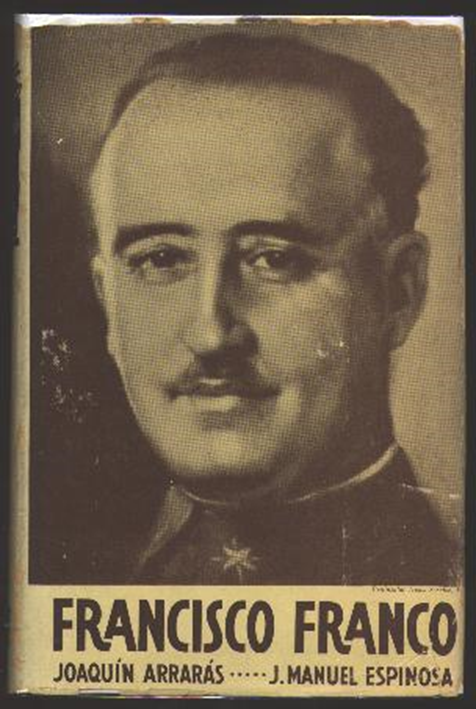
    Image courtesy of ReadInk Books.

    A fascinating article, The Twilight of the Planners, by William Henry Chamberlain, in the May 1, 1964 issue of The Freeman throws a ray of light on the economic statesmen who restored a war-ravaged Europe to prosperity.

    The prominence of Jacques Rueff, mentor to Lehrman Institute founder and chairman Lewis E. Lehrman, is striking:

    The recovery of Europe from postwar desolation to its present state of booming prosperity would never have taken place if early reliance on rationing, bilateral trade, government allocation of resources had not been scrapped and replaced by the normal methods of a free economy. And in this connection much credit is due to such statesmen as Ludwig Erhard in Germany, Reinhard Kamitz in Austria, the late Luigi Einaudi in Italy, and to truly liberal (not statist "liberal") economists, such as Jacques Rueff, Wilhelm Roepke, the late Walter Eucken, and, last but far from least, the late Per Jacobsson, who by their writings and official and unofficial reports strongly influenced the return to traditional economic wisdom.

    Jacobsson was a mighty battler against the dangers of inflation and the fallacies of "dirigism," the European word for state directed economy. His reports for the Bank for International Settlements in Basel were beacon lights of common-sense realism. And in the post which he occupied until his death as Secretary-General of the International Monetary Fund he was able to strike many blows for three basic economic freedoms, free movement of men, money, and goods across frontiers.

    Jacobsson’s contacts as representative of the IMF included the leading statesmen of Europe; and the transformation of the French franc from one of the softest currencies in Europe to one of the hardest may be, at least in part, the result of one of his talks with General de Gaulle. He recalled the fact that not the least of Napoleon’s achievements was the creation of a stable French currency, an achievement which long outlasted his empire. De Gaulle showed lively interest at the mention of the name of Napoleon and shortly after this talk measures were put into effect which stopped the continual erosion in the value of the franc.

    Another military head of state, General Franco of Spain, proved amenable to the arguments of Erhard and Rueff, whom he had invited to Spain to offer advice as to how best to revive the Spanish economy, which had been limping along under a good deal of government interventionism. Controls were abolished or relaxed, the currency was stabilized, tourists flocked into the country in increasing numbers, and exports boomed.

    One can but wish that Chamberlain's optimism about the Planners' sun having set had proved better founded. That said, one cannot but note how well-founded, by the outcomes, is his accolade for the "truly liberal (not statist 'liberal') economists, such as Jacques Rueff."

    One cannot but be struck by the historically obscure, yet important, fact of Rueff's benevolent influence on Franco, and thus Spain.

    And how crucial having a classical liberal at the helm of the IMF proved… and, if again tried, would prove … to the restoration of dignity, liberty, and their attendant handmaiden, equitable prosperity.

  • And Now You Know the Rest of the Story

    And Now You Know the Rest of the Story

    by Ralph J. Benko

    October 10, 2013

    Photo courtesy of the Library of Congress.

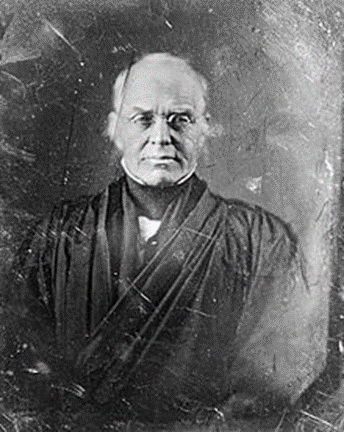
    Joseph Story is a name little known to the general public. Yet it is one relished by legal — and Constitutional — connoisseurs.

    As summed up by Wikipedia:

    Joseph Story (September 18, 1779 – September 10, 1845) was an American lawyer and jurist who served on the Supreme Court of the United States from 1811 to 1845. He is most remembered … especially for his magisterial Commentaries on the Constitution of the United States, first published in 1833. Dominating the field in the 19th century, this work is a cornerstone of early American jurisprudence. It is the first comprehensive treatise on the provisions of the U.S. Constitution and remains a critical source of historical information about the forming of the American republic and the early struggles to define its law.

    Story's Commentaries, of course, treated extensively with the Constitutional monetary powers of the federal government:

    § 1112. Under the confederation, the continental congress had delegated to them, "the sole and exclusive right and power of regulating the alloy and value of coin struck by their own authority, or by that of the states," and "fixing the standard of weights and measures throughout the United States." It is observable that, under the confederation, there was no power given to regulate the value of foreign coin, an omission, which in a great measure would destroy any uniformity in the value of the current coin, since the respective states might, by different regulations, create a different value in each. The constitution has, with great propriety, cured this defect; and, indeed, the whole clause, as it now stands, does not seem to have attracted any discussion in the convention. It has been justly remarked, that the power "to coin money" would, doubtless, include that of regulating its value, had the latter power not been expressly inserted. But the constitution abounds with pleonasms and repetitions of this nature.

    § 1113. The grounds, upon which the general power to coin money, and regulate the value of foreign and domestic coin, is granted to the national government, cannot require much illustration in order to vindicate it. The object of the power is to produce uniformity of value throughout the Union, and thus to preclude us from the embarrassments of a perpetually fluctuating and variable currency. Money is the universal medium or common standard, by a comparison with which the value of all merchandise may be ascertained, or, it is a sign, which represents the respective values of all commodities. It is, therefore, indispensable for the wants and conveniencies of commerce, domestic as well as foreign. The power to coin money is one of the ordinary prerogatives of sovereignty, and is almost universally exercised in order to preserve a proper circulation of good coin of a known value in the home market. In order to secure it from debasement it is necessary, that it should be exclusively under the control and regulation of the government; for if every individual were permitted to make and circulate, what coin he should please, there would be an opening to the grossest frauds and impositions upon the public, by the use of base and false coin. And the same remark applies with equal force to foreign coin, if allowed to circulate freely in a country without any control by the government. Every civilized government, therefore, with a view to prevent such abuses, to facilitate exchanges, and thereby to encourage all sorts of industry and commerce, as well as to guard itself against the embarrassments of an undue scarcity of currency, injurious to its own interests and credits, has found it necessary to coin money, and affix to it a public stamp and value, and to regulate the introduction and use of foreign coins. In England, this prerogative belongs to the crown; and, in former ages, it was greatly abused; for base coin was often coined and circulated by its authority, at a value far above its intrinsic worth; and thus taxes of a burthensome nature were laid indirectly upon the people. There is great propriety, therefore, in confiding it to the legislature, not only as the more immediate representatives of the public interests, but as the more safe depositaries of the power.

    § 1114. The only question, which could properly arise under our political institutions, is, whether it should be confided to the national, or to the state government. It is manifest, that the former could alone give it complete effect, and secure a wholesome and uniform currency throughout the Union. The varying standards and regulations of the different states would introduce infinite embarrassments and vexations in the course of trade; and often subject the innocent to the grossest frauds. The evils of this nature were so extensively felt, that the power was unhesitatingly confided by the articles of confederation exclusively to the general government, notwithstanding the extraordinary jealousy, which pervades every clause of that instrument. But the concurrent power thereby reserved to the states, (as well as the want of a power to regulate the value of foreign coin,) was, under that feeble pageant of sovereignty, soon found to destroy the whole importance of the grant. The floods of depreciated paper money, with which most of the states of the Union, during the last war, as well as the revolutionary war with England, were inundated, to the dismay of the traveller and the ruin of commerce, afford a lively proof of the mischiefs of a currency exclusively under the control of the states.

    § 1115. It will be hereafter seen, that this is an exclusive power in congress, the states being expressly prohibited from coining money. And it has been said by an eminent statesman, that it is difficult to maintain, on the face of the constitution itself and independent of long continued practice, the doctrine, that the states, not being at liberty to coin money, can authorize the circulation of bank paper, as currency, at all. His reasoning deserves grave consideration, and is to the following effect. The states cannot coin money. Can they, then, coin that, which becomes the actual and almost universal substitute for money? Is not the right of issuing paper, intended for circulation in the place, and as the representative of metallic currency, derived merely from the power of coining and regulating the metallic currency? Could congress, if it did not possess the power of coining money and regulating the value of foreign coins, create a bank with the power to circulate bills? It would be difficult to make it out. Where, then, do the states, to whom all control over the metallic currency is altogether prohibited, obtain this power? It is true, that in other countries, private bankers, having no legal authority over the coin, issue notes for circulation. But this they do always with the consent of government, express or implied; and government restrains and regulates all their operations at its pleasure. It would be a startling proposition in any other part of the world that the prerogative of coining money, held by government was liable to be defeated, counteracted, or impeded by another prerogative, held in other hands, of authorizing a paper circulation. It is further to be observed, that the states cannot issue bills of credit; not that they cannot make them a legal tender; but that they cannot issue them at all. This is a clear indication of the intent of the constitution to restrain the states, as well from establishing a paper circulation, as from interfering with the metallic circulation. Banks have been created by states with no capital whatever, their notes being put in circulation simply on the credit of the state. What are the issues of such banks, but bills of credit issued by the state?

    § 1116. Whatever may be the force of this reasoning, it is probably too late to correct the error, if error there be, in the assumption of this power by the states, since it has an inveterate practice in its favour through a very long period, and indeed ever since the adoption of the constitution.

    And now you know… the rest of the Story.

  • Fergusonzilla Destroys Krugtron the Invincible, Part 1

    Fergusonzilla Destroys Krugtron the Invincible, Part 1

    by Ralph J. Benko

    October 17, 2013

    [no caption]

    A dramatic, widely noticed, three-part series in the Huffington Post by Harvard professor, esteemed historian, and public intellectual Niall Ferguson has — if justice is served — destroyed any vestige of even a pretense of credibility of Nobel Laureate, and New York Times columnist and blogger, Princeton professor Paul Krugman.

    Drawing on Krugman's own Napoleonic bestowal, upon himself, of a title near infallibility, it is entitled Krugtron the Invincible. It is a devastating riposte to Krugman's own ill-founded critiques of Ferguson's work. There is an element of Greek tragedy here. By baiting Ferguson, Krugman precipitated his own downfall.

    From Part 1:

    "Maybe I actually am right," Krugman wrote back in April, "and maybe the other side actually does contain a remarkable number of knaves and fools. … Look at the results: again and again, people on the opposite side prove to have used bad logic, bad data, the wrong historical analogies, or all of the above. I'm Krugtron the Invincible!" That last allusion is to the 1980s science fiction superhero, Voltron. The resemblance between Krugman and Voltron was suggested by one of the gaggle of bloggers who are to Krugman what Egyptian plovers are to crocodiles. Yesterday one of these thought, wrongly, that he had caught me out. Unwisely, the crocodile snapped its jaws shut.

    I don't know which particular model Paul Krugman was using in the summer of 2012, but it certainly did rather a bad job of predicting what would happen. I laughed out loud at his recent lame excuse that his model couldn't have been expected to predict the action of the European Central Bank. What an awesome model: one that predicts everything about a monetary union except the action of the monetary authority.

    Besides its wrongness, the other striking feature of Krugman's commentary on the euro is the vitriol he has directed against those struggling to cope with the crisis. In December 2011, he called the then Italian Prime Minister Mario Monti "delusional." In March of this year, incredibly, he appeared to liken the Finnish Vice President of the European Commission, Olli Rehn, to a cockroach. Some people, I have come to realize, are intimidated by this lack of civility. But I am with Dilbert. It's simply absurd for this man to accuse others of "derping," a childish neologism meaning — in case you've forgotten — to "take a position and refuse to alter that position … despite being wrong again and again."

    "I like to think," Krugman wrote on August 14, "that if I had been proved … utterly wrong … I'd have had the strength of character to admit it and question my premises. But I don't know for sure, and with some luck I'll never find out." Now that I have shown Krugtron the Invincible to have been utterly and repeatedly wrong about the euro, I look forward to reading his admission of error.

    To be precise, I would like to see him admit that he got the biggest call of the last several years dead wrong, again and again and again. Not only should he admit his mistake, but he should also apologize to the millions of people who have suffered as a result of it. Or does he believe that his numerous, widely read predictions of imminent currency break-up had no impact whatever on the expectations of European investors and consumers?

    Excerpts from Part 2 to follow…

  • Liberty Street Economics

    Liberty Street Economics

    by Ralph J. Benko

    October 22, 2013

    The Federal Reserve Bank of New York — the flagship regional Federal Reserve Bank — publishes Liberty Street Economics, featuring "insight and analysis from economists working at the intersection of research and Fed policymaking."

    A recent article there published, by James Narron and David Skeie, Crisis Chronicles: The "Not So Great" Re-Coinage of 1696 is a marvel of historical erudition. Such scholarship is notable and its publication a great credit to the Bank. Some excerpts:

    In the late 1600s, England operated a bi-metallic monetary system of high-value gold coins and lower-value silver coins. In the early 1690s, however, the market price of silver began to rise at a time when the mint price of gold was higher than the market price. Thus, gold bullion was flowing to the mint while silver coins were flowing to the commodity markets. By 1695, nearly half of the silver specie was missing from coin in circulation in England as coins were “clipped” (shaved) with the result that their face value no longer reflected the metal content. Ironically, low-weight coin was still accepted for tax payments. In this post, we recount England’s efforts to remedy the “ill state of the coin of the kingdom” during the re-coinage of 1696.

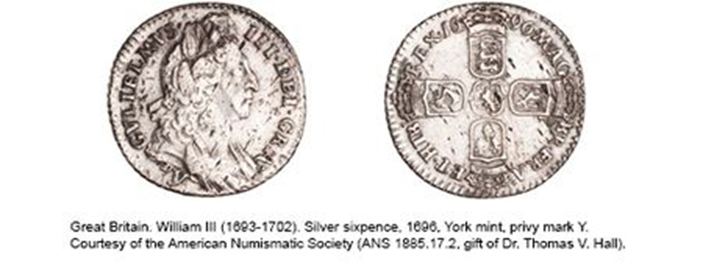
    By 1695, high-value gold coins were plentiful in England but there was a notable shortage of small-denomination silver coins, creating a monetary contraction. This led to a dual problem. First, the monetary contraction inhibited the ability to pay the armies engaged in the Nine Years’ War. Second, because silver was used for small-denomination subsidiary coins, the coin shortage impeded everyday transactions between individuals. The Bank of England did not have the authority to intervene in the markets, so a “Commission on the Coinage” was chartered from 1694 to 1695 to deal with the crisis. These developments set the stage for what economist Charles Larkin called “one of the great monetary events in history” in his work The Great Re-Coinage of 1696. During the Commission’s debates, many solutions to the crisis were proposed: Treasury Secretary William Lowndes favored devaluation, Treasury advisor Charles Davenant advocated the expansion of credit, and Royal Mint Master Sir Isaac Newton sought to achieve gold and silver mint price parity. Ultimately, a plan to demonetize the existing clipped coins and issue new, full-weight coins—put forward by Commission member and prominent philosopher John Locke—was approved. The William III silver sixpence shown below was minted in 1696 as part of the great re-coinage. It displays the milled edges introduced around 1662 in an effort to reduce clipping.

    In the second half of 1696, England’s economy essentially stopped, and the ensuing monetary contraction led to massive unemployment, poverty, and civil unrest. The smallest gold coin, the golden guinea, and various forms of credit provided the only remaining liquidity in the market, with the Duke of Beaufort famously being forced to pay for a dinner by entering his name in a book at the height of the crisis. The crisis ultimately spurred a new era of economies driven by a broad set of financial instruments, not just specie, and laid the foundations for the later development of “fiat money,” which is backed by full faith and credit in the issuing government, as we’ll explore in a future post on the Continental Currency Crisis.

    The views expressed in the Liberty Street Economics post "are those of the authors and do not necessarily reflect the position of the Federal Reserve Bank of New York or the Federal Reserve System. Any errors or omissions are the responsibility of the authors."

    James Narron is a senior vice president in the Federal Reserve Bank of New York's Executive Office. David Skeie is a senior economist in the Bank's Research and Statistics Group.

    The institution of "a new era of economies driven by a broad set of financial instruments, not just specie" proved, of course, salutary. The failing grades given to the "Federal Reserve Note Standard" relative both to the classical gold and gold-exchange standards, given by the Bank of England in its December 2011Financial Stability Paper No. 13 however, clearly demonstrates "fiat money" as an unhealthy alternative to the definition of the currency as a fixed weight of gold.

  • Wishing Wells: The Apotheosis of Neo-Keynesian Economics?

    Wishing Wells: The Apotheosis of Neo-Keynesian Economics?

    by Ralph J. Benko

    October 29, 2013

    Antique Print, 1882.

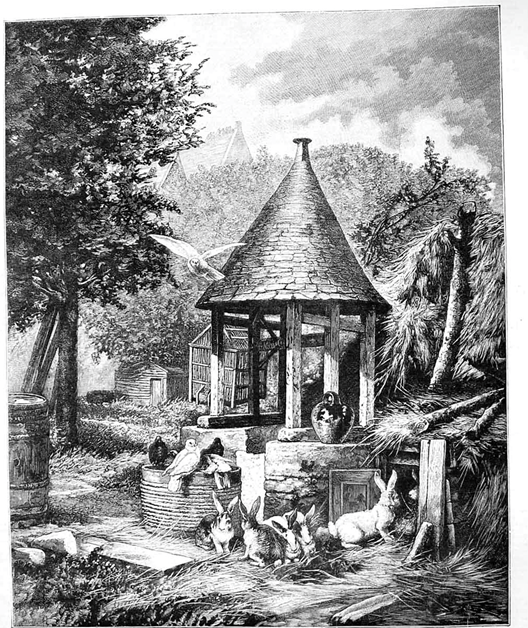
    Tossing coins into a well and making a wish?

    This is a custom so ancient that nobody has discovered its origin. Consider a virtual one, from Stone Hill Graphics, which invites us to "Enjoy and make as many wishes as you want to" bragging that "the coin will never run out, it is endlessly renewing!"

    So delightful the Stone Hill Graphics depiction it even has drawn a passing note, both whimsical and scholarly, from the Federal Reserve Bank of New York's research librarian, Amy Farber, in the bank's blog, Liberty Street Economics:

    Do you throw coins into a fountain when you see that others have done so? A comprehensive and thoughtful student project on wishing well use in Southern California has been posted on the internet by University of California, Irvine, anthropology professor Bill Maurer. The 2006 project bases its findings on interviews of people throwing coins into fountains and states that:

    Although the exact origins of this practice are unknown, offering money to water is an old tradition that can be dated back to Roman-British and Celtic mythology. Since then, the tradition of making a wish with a coin has been passed down through generations by socialization, evolving from a religious ritual into a fun, yet superstitious, cultural practice in Southern California.

    Disclaiming, as always, that "The views expressed in this post are those of the author and do not necessarily reflect the position of the Federal Reserve Bank of New York or the Federal Reserve System. Any errors or omissions are the responsibility of the author."

    There is, of course, no correlation whatsoever between policies of Quantitative Easing and … a virtual invitation to "Enjoy and make as many wishes as you want to … the coin will never run out, it is endlessly renewing!"

    It is a mark of great dignity that the Bank will permit, even unofficially, a spot of refreshing whimsey to appear.

    Also coming to mind, from another source, is a satirical blog posted at Open Salon by a shy genius operating under the nom de plume of Noirville Headinlocker.

    In his blog, overall captioned Orwell Was an Optimist, the pertinent, impertinent, entry is entitled "American Monetary Policy Sans Gold Standard." It features an image of Willy Wonka (as played by Gene Wilder) with the message superimposed, "It's really quite easy. You simply write down the amount of money you want to magically appear, and it does. I learned that trick from the New York Federal Reserve."

    And goes on to say:

    The most powerful man in the world isn't Barack Obama, its Ben Bernanke. Imagine having a magic checkbook you can fill with any numbers you want and give to your friends. "And would you be interested in 25 billion? I think I can manage that…..There. You are rich." We either have a gold standard or a magic checkbook.

    I would be interested in 25 billion. If only the Neo-Keynesians were right … this blogger certainly would take a check from the magic checkbook in a New York minute.

    What a pity such magic, capable of being used with impunity, does not exist.

  • Fergusonzilla Destroys Krugtron the Invincible, Part 2

    Fergusonzilla Destroys Krugtron the Invincible, Part 2

    by Ralph J. Benko

    October 24, 2013

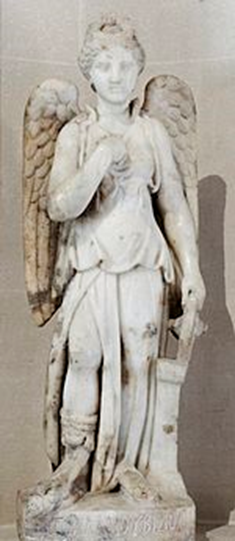
    Nemesis, Goddess of Retribution, from the Louvre.

    As noted in a prior blog, a three-part series in the Huffington Post by Niall Ferguson has demolished any public credibility of Paul Krugman. Or his acolytes.

    In a gesture of intellectual narcissism apparently utterly unmitigated either by irony or whimsy, Krugman lugubriously had presented himself Krugtron the Invincible. The Greeks certainly had it right. Those who have achieved oblos (great wealth, or, in Krugman's case, prominence) often are followed by hubris, overweening pride.

    Hubris inevitably is stalked, and felled, by the goddess of retribution, Nemesis.

    Here Ferguson serves as the instrument of the goddess.

    Some excerpts from Part 2:

    As I pointed out yesterday, Paul Krugman's right to consign others to the "Always-Wrong Club", and routinely to insult anyone who dares to disagree with him, is fatally vitiated by his own embarrassingly bad record of commentary on the European phase of the financial crisis. His repeated and erroneous predictions of the European Monetary Union's imminent collapse constitute a perfect example of what he and his cronies childishly call "derping": to "take a position and refuse to alter that position no matter how strongly the evidence refutes it, who continue to insist that they have The Truth despite being wrong again and again".

    Regrettably, Krugman – also known to himself and his cronies as "the Invincible Krugtron" has not found time in his busy schedule of blogging to make the apologies that I believe are due, not only for his incivility and hypocrisy, but also for his own personal contribution to the crisis of confidence that afflicted Europe in 2011 and 2012. Seldom in the history of the economics profession can one man in a crowded theater have shouted fire more often and more loudly, apparently indifferent to the real economic consequences of his actions.

    One might have expected a little more humility from an economist who so clearly failed to understand the nature of the biggest financial crisis of his lifetime until after it had happened. Or at least a little less egomania: "Yes," he wrote in January, "I've heard about the notion that I should be Treasury Secretary. I'm flattered, but it really is a bad idea." Gee, Professor Krugman, why do you say that?

    It would mean taking me out of a quasi-official job that I believe I'm good at and putting me into one I'd be bad at. … An op-ed columnist at the [New York] Times … [can] have a lot more influence on national debate than, say, most senators. Does anyone doubt that the White House pays attention to what I write? … By my reckoning … an administration job, no matter how senior, would actually reduce my influence.

    Not to mention smugness….

    Once upon a time one of the Rolling Stones (Keith Richards, if memory serves) was asked his opinion about one of the leading bands of the punk rock era. He observed that they had the insolent attitude of a rock star down perfectly. Implying, of course, that they lacked (as they did) the technical skill and mastery of the true greats… like the Rolling Stones. Krugman, too, has the attitude down.

    Lehrman Institute founder and chairman, Lewis E. Lehrman, frequently makes reference to the moral necessity of developing policy based on what he calls "the laboratory of history." It therefore is notable that the agent of the goddess, here, is an historian, devastating an academic theoretician. How apt that an amanuensis of Kleio, goddess, muse, of History should serve as the agent of Nemesis in the undoing of Paul Krugman.

  • Slate: “Cato Institute Staging Gold Standard Love-In”

    Slate: "Cato Institute Staging Gold Standard Love-In"

    by Ralph J. Benko

    November 05, 2013

    Matthew Yglesias courtesy of Wikipedia.

    Slate, the online magazine, recently published a more than ordinarily thoughtful piece by gold standard skeptic Matthew Yglesias entitled Cato Institute Staging Gold Standard Love-In.

    Yglesias:

    Given the past five years of unusually low inflation and unusually low employment relative to the size of the population, the only sensible question to ask about monetary policy is whether the Federal Reserve has done enough to support aggregate demand and economic growth. Instead, the libertarian Cato Institute is sending out invitations to a November conference dedicated to talking about the gold standard:

    CATO’S 31ST ANNUAL MONETARY CONFERENCE — WAS THE FED A GOOD IDEA? — will bring together some of the world’s leading scholars and policymakers to consider the record of the Federal Reserve since its establishment in December 1913. The Great Depression left a black mark on the nation’s central bank and the Great Recession has vastly expanded the bank’s powers. In 1913, the dollar was defined in terms of gold. Today we have a pure fiat money and the Fed is the largest buyer of U.S. public debt, enabling the federal government to live beyond its means. Would we have been better off adhering to the rules of a gold standard? This conference will address that issue by examining the regulatory record of the Fed, discussing the constitutional basis for adhering to a convertibility principle, and by making the case for a National Monetary Commission to consider alternatives to the current regime.

    Yglesias concludes that there is:

    "a deep yearning to give the case for free markets a profound moral reading rather than a pragmatic one, and that reading is hard to maintain in the face of a modern monetary system. Hence the hankering for gold."

    This, by dismissing the pragmatic arguments for the gold standard — which Yglesias does not, in fact, grapple with — is a too-facile critique. Yet there are signs that Yglesias, one of the smarter (magna cum laude, Harvard University, 2003), and more decent, cats in the Neo-Keynesian alley, has, perhaps for the first time, begun engaging thoughtfully with the proponents of gold. [One hopes that the unfortunate inclusion of the neologism "derp" in the article's URL was interposed by an editor; use of the term "derp" would be the mark of an infantile twerp.]

    Two years ago, Yglesias indulged in an much more facile dismissal of gold. At ThinkProgress.org, the propaganda arm of the Vast Left Wing Conspiracy, he wrote The Trouble With Gold:

    Interestingly, what won’t give you the security you crave is the adoption of a gold standard. If a federal law mandates that $1,000 be worth a certain amount of gold, there’s nothing stopping congress from changing the law later. If you want the alleged security of gold, there’s no substitute for gold. A gold standard is neither necessary nor sufficient.

    Nor does gold ensure stable prices. What it ensures is that inflation trends are driven by the supply of gold. Find a new gold mine somewhere: inflation. Aliens come to steal gold: deflation. All you’re doing is randomizing the extent and timing of inflation.

    "Aliens come to steal gold?" This clearly was not grappling with the data (or real world).

    Now, as Slate's business and economics correspondent, Yglesias presents a somewhat more mature perspective, one in which he presents as groping to understand the grounding of the libertarian (although not the classical liberal conservative) narrative in support of the gold standard. Yglesias's future critiques will be far more interesting, and useful, once he moves beyond a superficial reading of the arguments of the gold standard's proponents. These are not, predominantly, rooted in inflation-phobia, here imputed, groundlessly, to Cato's scholars.

    The gold standard is not solely based in a "profound moral reading" to the exclusion of a pragmatic one. Moreover, the classical gold standard leans neither right nor left, not authoritarian nor libertarian. Left wing icons — Karl Marx, for one, and George Bernard Shaw, for another — were gold standard proponents. Keynes, for another (although soon thereafter abjuring the gold standard — or at least its "evil twin" the gold-exchange standard) wrote, in 1922:

    "If gold standards could be introduced throughout Europe, we all agree that this would promote, as nothing else can, the revival not only of trade and production, but of international credit and the movement of capital to where it is needed most. One of the greatest elements of uncertainty would be lifted…and one of the most subtle temptations to improvident national finance would be removed; for if a national currency had once been stabilized on gold basis, it would be harder (because so much more openly disgraceful) for a Finance Minister so to act as to destroy this gold basis."

    The left potentially has a very constructive, potentially crucial, role in the coming debate about the restoration of the classical gold standard. The restoration must set a conversion parity at which the value of the dollar is defined. This is an important matter.

    As indicated in The True Gold Standard by Lehrman Institute founder and chairman, Lewis E. Lehrman — who will be presenting the Closing Address at the very Cato monetary conference skeptically, and unduly superficially, questioned by Yglesias — this will be determined, initially, by a price discovery period. But Lehrman also has called for a step to ensure that labor and debtors cannot be prejudiced in the process.

    The higher the parity, the more it privileges capital and creditors. The lower the parity, the more it privileges labor and debtors. Lehrman has been virtually alone in calling for a mechanism as added insurance that labor and debtors are not prejudiced in the process of setting the new price parity (as happened, for example, in 1925).

    Yglesias — if he begins to focus on the actual, rather than posited, propositions of the key classical liberal gold standard proponents, like Lehrman — would add a most welcome contribution to the discourse. The major classical liberal proponents propose the gold standard — with much empirical data to support the argument — as a mechanism to restore a climate of equitable prosperity for labor and the middle class.

    This very much includes reducing the income inequality that began to become pandemic when President Nixon, on August 15, 1971, repudiated the last vestiges of the gold standard. The perspective of the left on the real presenting issues of restoration would be welcome.

    The perspective of honest liberals, in fact, would be invaluable.

  • Kipper und Wipperzeit (Tipper and See-saw)

    Kipper und Wipperzeit (Tipper and See-saw)

    by Ralph J. Benko

    October 31, 2013

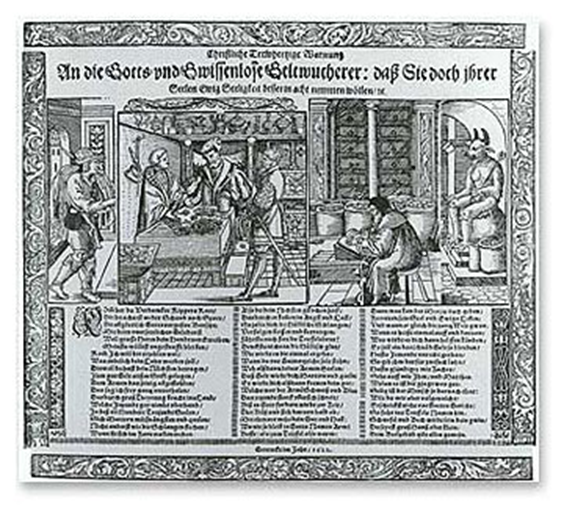
    Flugschrift aus der Kipper- und Wipperzeit gegen die Geldverschlechterung durch diePrägung minderwertiger Münzen: An die Gotts- und Gwissenlose Geltwucherer, 1622, Holzschnitt (ÖNB).

    Two erudite scholars, James Narron and David Skeie, publishing at the Federal Reserve Bank of New York's Liberty Street Economics are treating their history-minded readers to "new series chronicles mostly forgotten financial crises over the 300 years — from 1620 to 1920 — just prior to the Great Depression."

    As they observe, "As momentous as financial crises have been in the past century, we sometimes forget that major financial crises have occurred for centuries—and often." Their June 24, 2103 publication takes us back to the early 17th century:

    The Kipper und Wipperzeit is the common name for the economic crisis caused by the rapid debasement of subsidiary, or small-denomination, coin by Holy Roman Empire states in their efforts to finance the Thirty Years’ War (1618–48). In a 1991 article, Charles Kindleberger—author of the earlier work Manias, Panics and Crashes and originally a Fed economist—offered a fascinating account of the causes and consequences of the 1619–23 crisis. Kipper refers to coin clipping and Wipperzeit refers to a see-saw (an allusion to the counterbalance scales used to weigh species coin). Despite the clever name, two forms of debasement actually fueled the crisis.

    The rapid debasement up to 1622 created a European boom, which turned to mania by early 1622 when average citizens turned to coin clipping as a livelihood, then hyperinflation in 1622 and 1623. Many became rich by exploiting the unknowing—typically peasants. This ultimately led to a widespread breakdown in trade as peasants, fearing that they would be paid in debased coin, refused to bring products to market, creating the spillover to the broader economy.

    Cry Up, Cry Down, or Call In

    One response to the crisis was for states to “cry up” good coins by raising the denomination or “cry down” bad coins by lowering their denomination. Another response was to “call in” coin and re-mint it. A third response was to enforce minting standards. But central authority was so weak that no one state could solve the crisis without the help and support of neighboring states. States were finally able to solve the crisis through mint treaties and by setting exchange rates, with hyperinflation subdued by a return to the Imperial Augsburg Ordinance of 1559. Because the public became so wary of clipped and debased coin, it took months to convince the masses that coin was good once it was restored.

    “The views expressed in this post are those of the authors and do not necessarily reflect the position of the Federal Reserve Bank of New York or the Federal Reserve System. Any errors or omissions are the responsibility of the authors.”

    It is from the laboratory of history, as Lehrman Institute founder and chairman Lewis E. Lehrman observes, from which we can derive the lessons to guide our steps today. And one invariable lesson of history is that the debasement of money inevitably fuels crisis.

    Whether resolved by crying up or crying down, degrading the unit of account inevitably ends in tears.