Continuing the legacy of Copernicus, Newton, Priestly, Rueff, Lehrman, and all other visionaries who advocated for the classical gold standard…

Ralph Benko
Welcome to both the gold-curious and the world’s experts in the gold standard!
Bravo! You have reached an authoritative, fact-based, website in all matters relating to the classical gold standard. We provide comprehensive educational materials to deepen your understanding of the classical gold standard and its relevance today.
I was one Lewis E. Lehrman’s two protégés. Lehrman, founder of The Lehrman Institute, was himself a protégé of the Honorable Jacques Rueff, the classical gold standard’s leading advocate in the 20th century — as was Lehrman after Rueff.
I went on to serve as the editor and primary blogger of the Lehrman Institute’s thegoldstandardnow.org. This site, with the permission of Lewis E. Lehrman, reproduces Benko’s award-nominated professional blogs from that site.
Ralph Benko
Founder and Editor-in-Chief
Latest Articles & Essays…
-

Stop blaming corporate greed — The real reason you can’t afford anything is fake money
From the Washington Examiner: Sen. Rand Paul (R-KY) recently, and quite uniquely, nailed the true cause of the affordability issue. It isn’t corporate price gouging or other standard, conventional scapegoats — such as greedy corporations, or deregulation, or heavy regulation, or environmental restrictions on…
-
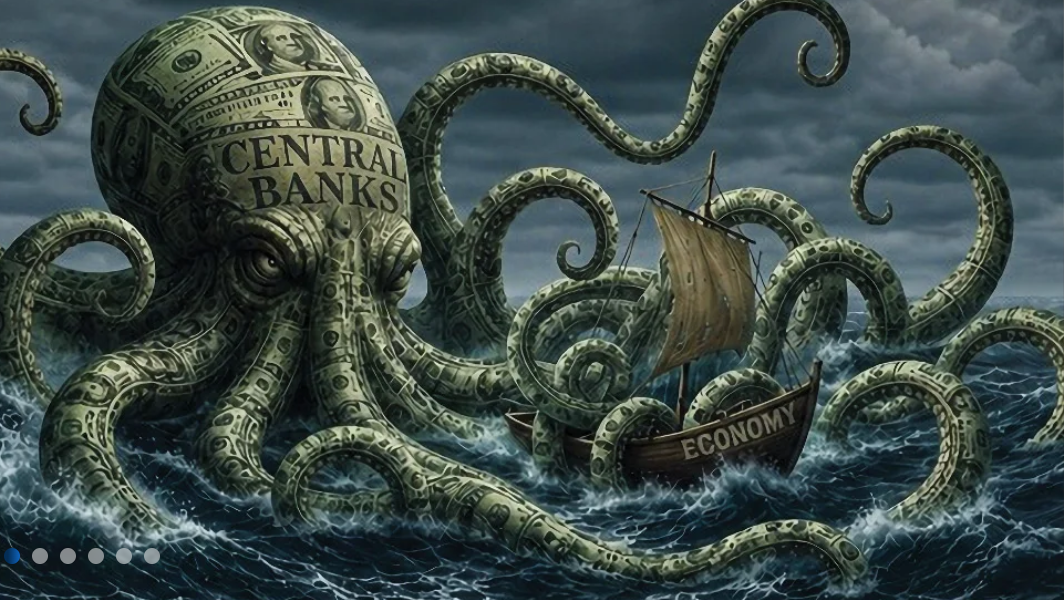
“On the Minting of Money” Featured in The Independent Review
Liberty Fund senior fellow and writer for The Independent Review, Leonidas Zelmanovitz contributed a review of our recently published modern translation of On the Minting of Money, Nicolaus Copernicus’s groundbreaking essay. From his review… The short volume under review, which…
-

Jim Puplava Talks Copernicus with Ralph Benko
Financial Sense Newshour’s Jim Puplava speaks with Ralph Benko, editor of 500th Anniversary edition of On the Minting of Money by Nicolaus Copernicus, about the ongoing dangers of currency debasement and its impact on society.
Latest MEDIA…
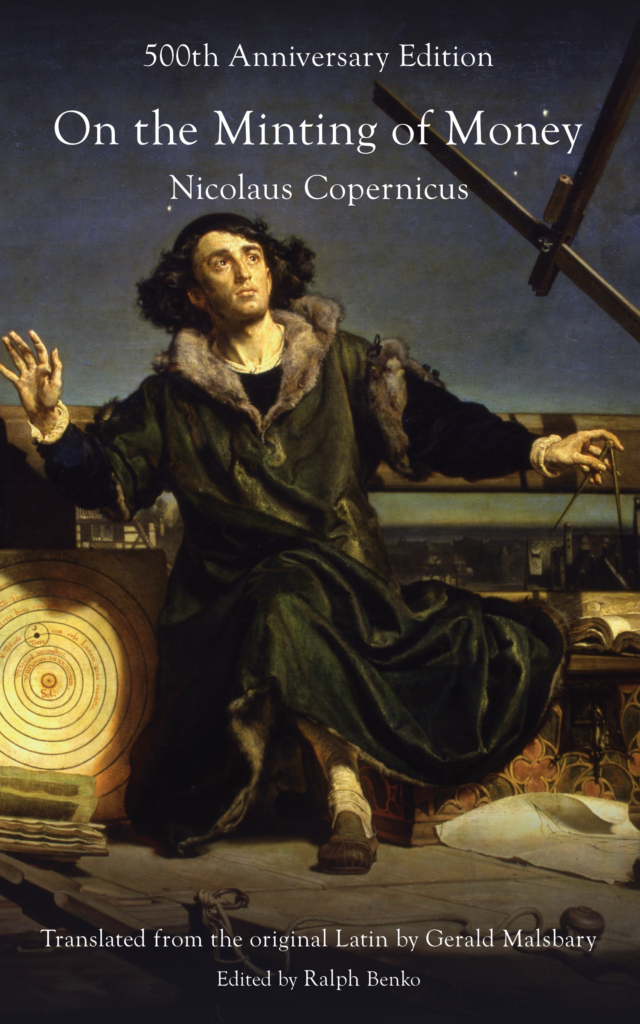
On the Minting of Money
Nicolaus Copernicus
Ralph Benko, editor
Gerald Malsbary, translator
This 500th Anniversary edition of On the Minting of Money – Monetae Cudendae Ratio – is a modern translation of Nicolaus Copernicus’s groundbreaking essay which proposed solutions to the effects of currency debasement and inflation. Copernicus’s treatise famously anticipated Sir Thomas Gresham’s 1558 economic principle that “bad money drives out good” and Sir Isaac Newton’s 1717 de facto gold standard which he proposed as Master of the Royal Mint of Great Britain, making this essay a fundamental cornerstone to modern economic theory and a fundamental basis for understanding the current affordability crisis dominating American political discourse.
On the Minting of Money, serves as a powerful reminder of the scientific provenance of the gold standard. Now, thanks to gold standard expert Ralph Benko and virtuoso Latin scholar Gerald Malsbary, let us hope the insights of Copernicus will inspire our political leaders to once again lift their lamp beside the golden door to bring a new golden age to America and the world.
– Steve Forbes, Chairman and Editor-in-Chief of Forbes Media
Here is the definitive modern translation of an essay by no less than Nicolaus Copernicus – the polymath who moved the sun into the center of our solar system and thus set the clocks and cycles of all human life and history, including the foundations of money. Sincere appreciation of leading gold standard advocate, Ralph Benko, for his work in rescuing this amazingly important essay from undeserved obscurity.
– George Gilder, author of The Scandal of Money and Wealth and Poverty and co-founder of the Discovery Institute.

Financial Sense Podcast
May 22, 2026
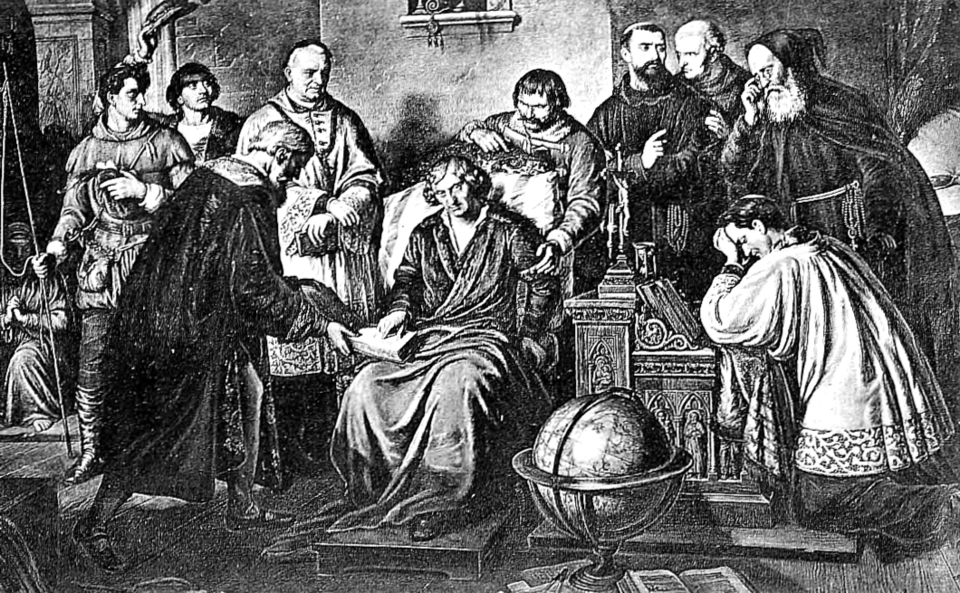
“Financial Sense Newshour’s Jim Puplava speaks with Ralph Benko, editor of 500th Anniversary edition of On the Minting of Money by Nicolaus Copernicus, about the ongoing dangers of currency debasement and its impact on society. Benko explains how Copernicus, just as he revolutionized astronomy by placing the sun at the center of the solar system, recognized sound money as the essential center of a healthy economy. The conversation explores the historical benefits of the gold standard, why inflation reflects a declining currency, and how modern policy has strayed from these principles. Benko argues that restoring monetary integrity could revive growth and prosperity.”
– from FinancialSense.com